
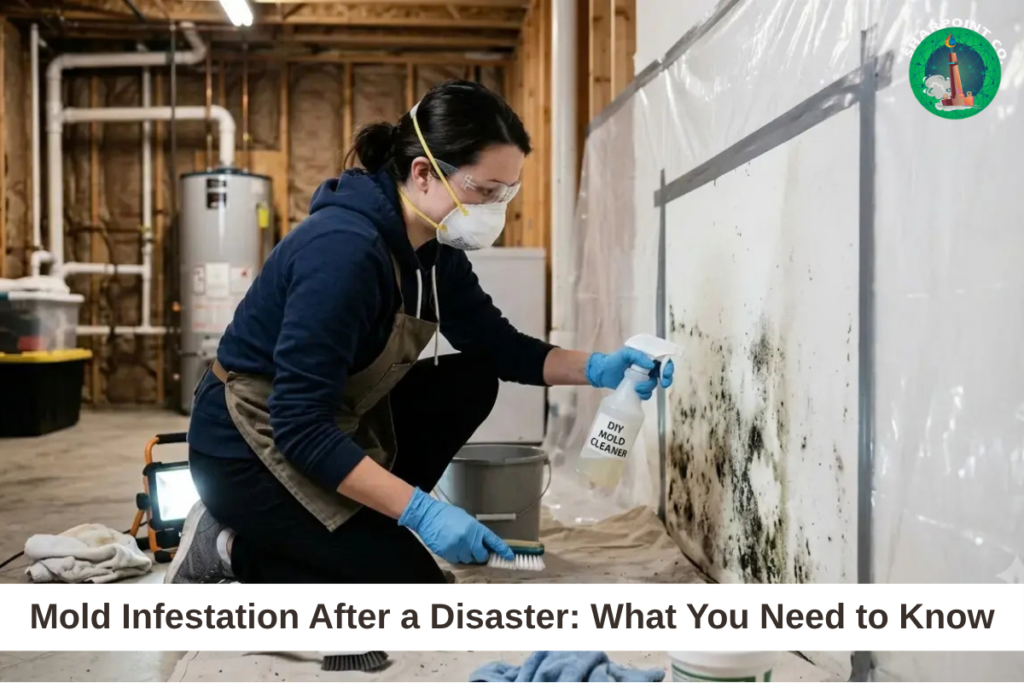
When floods, storms, or burst pipes leave behind moisture, mold is never far behind. As a result, a mold infestation after a disaster can damage property, trigger health problems, and derail recovery if it is not handled quickly. Therefore, understanding the warning signs and taking timely action can make the recovery process safer and more manageable. This guide from Sharpoint LLC answers the most common questions and provides clear, direct steps to help you respond effectively.
How Quickly Does Mold Grow After a Disaster?
Mold can begin growing within 24 to 48 hours of water intrusion. Therefore, the CDC advises cleaning and drying wet items within 48 to 72 hours to help prevent growth. In disaster conditions, however, acting within the first 24–48 hours is especially important. After all, mold spores need only moisture and organic material to begin spreading.
Mold spores are naturally present in most indoor environments. However, they can quickly become a concern when they land on wet surfaces such as drywall, wood, carpet, or insulation. Once humidity stays above 70% for several days, mold growth can accelerate. For this reason, treat every water-damaged structure as if mold may already be present.
What Are the Health Risks of Mold After a Disaster?
Mold exposure can cause allergies, asthma flare-ups, coughing, sneezing, watery eyes, and skin irritation. People with weakened immune systems, asthma, or allergies face the highest risk. For this reason, children should not take part in disaster cleanup. If symptoms worsen, seek medical advice promptly rather than ignoring the warning signs.
During cleanup, airborne mold spores can increase. As a result, dampness-related fungi are linked to dermatitis, rhinosinusitis, bronchitis, and asthma. Therefore, if you have a chronic lung condition, do not enter a building with visible mold or a strong musty smell.
How Do You Identify Mold After a Disaster?
Look for visible discolored patches, a musty odor, and unexplained respiratory symptoms. In addition, mold may hide behind drywall, under carpet, in crawl spaces, and around plumbing. Therefore, inspect all water-damaged areas within 48 hours to catch hidden mold early and protect your home and family.
What Does Mold Smell Like?
A musty, earthy, or damp odor. If you smell it but see nothing, mold may be behind walls or under flooring.
Where Does Mold Hide After Flooding?
A musty, earthy, or damp odor can be an important warning sign of hidden mold. Even if you cannot see it, mold may be growing behind walls or beneath flooring. Therefore, do not ignore a strange smell, as finding the source early can help protect your home and your family.
What Should You Do First When You Find Mold?
Stop the moisture source, dry the area within 24–48 hours, wear protective gear, discard porous materials, and clean hard surfaces. Do not use fans if mold is already present. Never paint over mold.
1. Stop the water and fix leaks.
2. Dry the space with ventilation and dehumidifiers.
3. Wear an N-95 respirator, goggles, gloves, and boots.
4. Discard carpet, padding, mattresses, and soaked wallboard.
5. Clean hard surfaces with bleach solution or white vinegar.
6. Monitor for returning moisture and mold.
What Is the Difference Between DIY Cleanup and Professional Remediation?
DIY works for small areas under 10 sq ft. Professional remediation is safer for large areas, hidden mold, or health-sensitive occupants. Pros use containment, HEPA vacuums, air scrubbers, and moisture mapping. Post-remediation testing lowers recurrence risk.
| Factor | DIY Cleanup | Professional Remediation |
| Best for | Small patches | Large or hidden mold |
| Equipment | Bleach, mask, gloves | HEPA vacuums, air scrubbers |
| Health risk | Higher spore exposure | Controlled containment |
| Verification | Visual check | Post-remediation testing |
| Recurrence risk | High if moisture remains | Lower with full moisture mapping |
How Can You Prevent Mold After a Disaster?
Control moisture. Dry within 48–72 hours, ventilate wet areas, discard soaked materials, keep indoor humidity below 60%, and have HVAC checked before restarting. If you see or smell mold, clean immediately and monitor for returning moisture.
· Clean and dry wet items within 48–72 hours.
· Keep wet areas well-ventilated.
· Discard materials that cannot be dried.
· Maintain indoor humidity between 30% and 50%.
· Clean HVAC systems before turning them back on.
When Should You Call a Professional?
Call a professional if mold covers more than a small patch, returns after cleaning, is hidden inside walls, or if occupants have asthma, allergies, or weakened immunity. Without containment, DIY cleaning can spread spores and increase health risks.
· Mold covers more than 10 square feet.
· Mold returns after you clean it.
· You suspect mold inside walls, ceilings, or HVAC systems.
· Anyone in the building has asthma, allergies, or a weakened immune system.
· The water damage came from contaminated water (sewage or floodwater).
H2: Why Choose Sharpoint LLC for Mold Remediation After a Disaster?
Sharpoint LLC provides moisture mapping, containment, safe mold removal, and post-remediation verification. We help homeowners and businesses recover after disasters with a focus on health, safety, and long-term prevention.
· Certified technicians with disaster recovery experience.
· Full containment to stop spores from spreading.
· HEPA vacuuming and air scrubbing for thorough removal.
· Post-remediation testing to confirm safety.
· Prevention guidance to stop mold from returning.
Contact Sharpoint LLC for an assessment.
What Should You Do Right Now?
If you suspect a mold infestation after a disaster, act quickly rather than letting the worry grow. First, begin drying the affected areas, document the damage, and identify the source of the moisture. In addition, avoid disturbing heavily affected materials, as this can spread mold spores through the air. If the damage is extensive or mold continues to return, contact a qualified professional for an assessment. By taking action early, you can help protect your property, reduce further damage, and give yourself greater peace of mind during an already difficult recovery. Sharpoint LLC is here to help you take the next step toward a safer, healthier space.
Final Thought
A disaster can leave homeowners feeling overwhelmed, especially when the damage continues long after the immediate emergency has passed. However, mold can become another hidden concern when moisture remains trapped in walls, floors, or other materials. Fortunately, taking action early can help make the recovery process safer and more manageable. By protecting people, isolating affected areas, drying wet materials, and fixing the source of moisture, you can reduce the conditions that allow mold to spread. In addition, proper mold remediation and regular monitoring can help protect the space from future problems. Ultimately, with patience, care, and the right approach, damaged spaces can gradually move from uncertainty toward recovery, helping families and businesses feel safe and comfortable again.
FAQs
Q1: Does Bleach Kill Mold on Every Surface?
A: No. Bleach works on non-porous surfaces like tiles and glass, but it cannot penetrate porous materials such as drywall, wood, or carpet. On porous surfaces, bleach only kills surface mold while roots remain and regrow. For porous items, removal and replacement are safer and more effective.
Q2: Can Mold Return After Professional Remediation?
A: Yes, if the moisture source is not fully fixed. Professional remediation removes existing mold and dries the structure, but new leaks, high humidity, or flooding can trigger new growth. Regular inspections and moisture control are essential to prevent recurrence after a disaster.
Q3: Is It Safe to Stay in a Home With Mold After a Disaster?
A: It depends on the extent and your health. Small areas with no health symptoms may be manageable with proper cleanup. However, if mold covers large areas, smells strongly, or anyone has asthma or allergies, leave the building until remediation is complete. Consult a doctor if symptoms appear.
Q4: How Much Does Mold Remediation Cost After a Disaster?
A: Costs vary by area size, mold type, and hidden damage. Small jobs may cost a few hundred dollars. Large-scale remediation after flooding can reach several thousand. Most homeowners insurance policies cover mold if it results from a covered disaster, but limits apply. Get a professional assessment.
Q5: Does Homeowners Insurance Cover Mold After a Disaster?
A: Sometimes. Coverage depends on the cause. If mold stems from a covered peril like a burst pipe or storm, it may be covered up to your policy limit. Mold from long-term neglect or flooding without separate flood insurance is usually excluded. Document everything and file promptly.